AI for Normal People: What It Actually Does Well
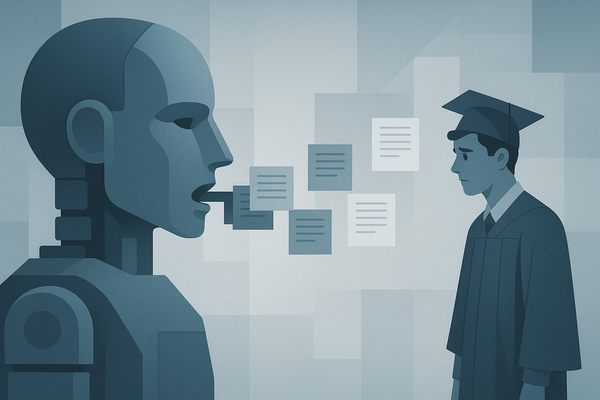
AI tools are no longer just for developers and researchers. Here is what large language models can realistically do for everyday people in healthcare, education, mental health, and creative work, plus where they fall short.

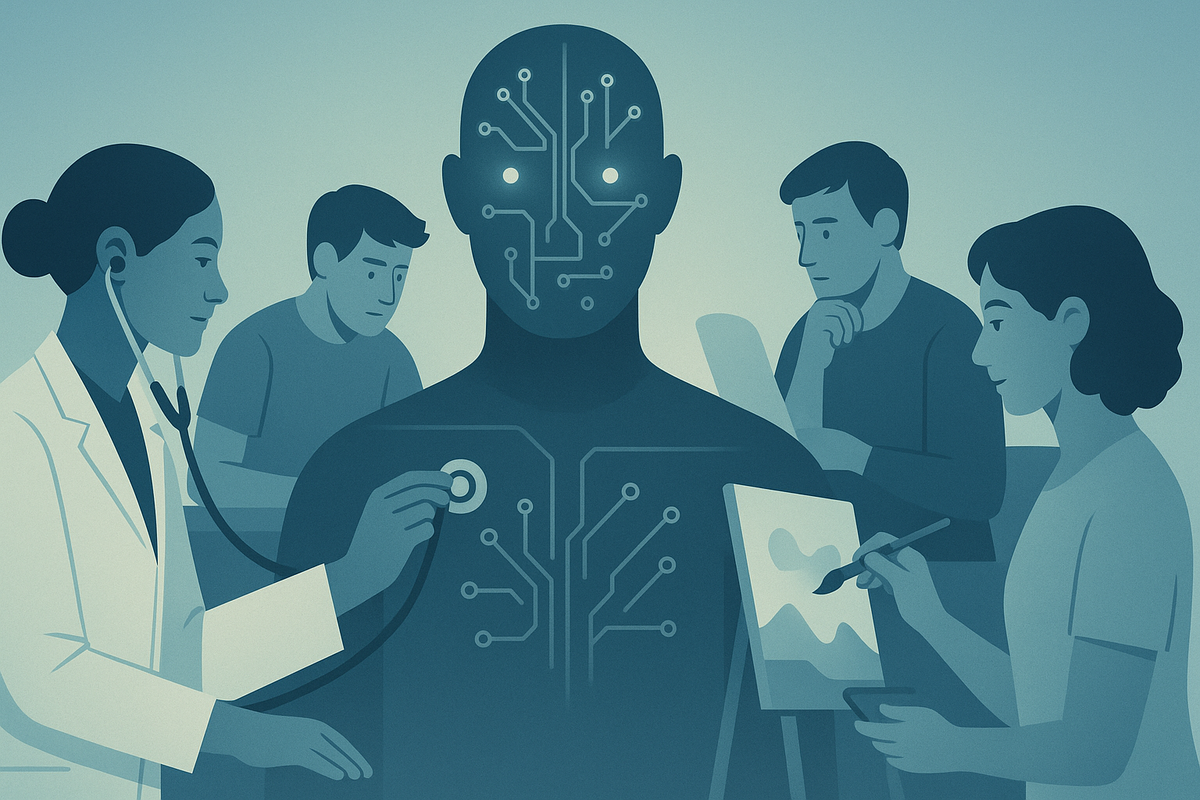
Most of the coverage around AI focuses on what it means for companies, economies, or the future of work. That framing is useful for exactly none of the things a regular person needs to get through Tuesday. The more pressing question is simpler: can these tools actually help you, right now, with the stuff you deal with every day?
The short answer is yes, more than most people realize, with a few caveats worth knowing upfront.
Health Information You Can Actually Get
Access to medical knowledge has always been unequal. If you can afford a specialist, great. If you cannot, you get a twenty-minute appointment and a printout you have to Google anyway. AI does not fix the healthcare system, but it does something concrete: it makes clinical information accessible at any hour, in plain language, across dozens of languages.
Research from Biswas and Islam (2023) found that ChatGPT shows measurable potential as a personal medical assistant, answering clinical questions with enough accuracy to be useful for health education and basic guidance. The researchers are clear that AI should supplement professional advice, not replace it. That is the right framing. A chatbot cannot examine you. But it can explain what a diagnosis means, help you prepare questions for your doctor, or translate medical jargon into something a person can understand at 11pm when no clinic is open.
The equity angle matters here. Not everyone lives near a specialist. Not everyone speaks the dominant language of their healthcare system. AI does not solve those problems structurally, but it hands people a better starting point.
Mental Health Support at Scale
This is where the evidence gets both promising and uncomfortable at the same time.
A 2026 scoping review by Ni and Jia found that AI-driven mental health tools, including LLM-based chatbots, are increasingly used for emotional support, screening, and therapeutic assistance. The key insight is access. Traditional mental health care has a supply problem. There are not enough therapists, they are expensive, and waitlists in many places stretch months. AI fills a gap that would otherwise go unfilled.
A separate analysis by Haensch (2025) looked at how people actually talk about using LLMs for mental health on social media. Many users describe AI as more attentive and available than their therapists. That sentence should produce two reactions: relief that people are finding support, and concern about what it says about the state of mental healthcare. Both reactions are correct.
The risks are real. Over-reliance on a system with no clinical oversight, no ability to detect crisis situations reliably, and no accountability is a genuine problem. AI chatbots should not be the primary mental health resource for someone in serious distress. But for low-acuity support, for people processing daily stress, for those who need to feel heard at 2am with no other option available, they serve a function that is not nothing.
Writing Help That Does Not Require a Communications Degree
One of the most practical and underappreciated uses of AI is writing assistance. Not for novels or journalism, though those exist too, but for the writing that most people dread: cover letters, formal emails, complaint letters, grant applications, business proposals, medical appeals. Documents that carry real stakes and require a register most people were never taught.
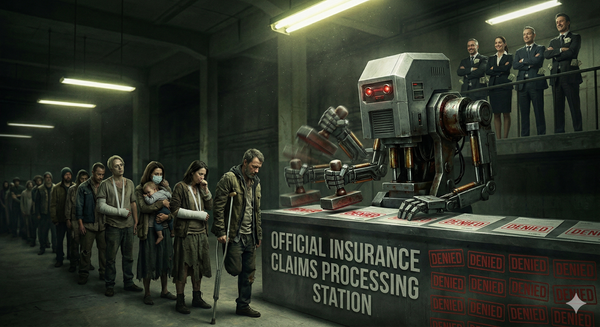
Wasi and Islam (2024) examined how people use LLMs as writing assistants and found that the tools are effective at this task while raising genuine questions about authorship and creative ownership. Those questions are worth sitting with, but they are largely secondary for someone who needs to write a letter disputing a health insurance denial and has never done it before. In that context, AI levels a playing field that was never fair to begin with.
Professional writers have a more complex relationship with these tools. Research by Ippolito and Yuan (2022) found that writers appreciate AI assistance for overcoming blocks and generating options, but care about maintaining creative control. The consensus seems to be: useful collaborator, not a replacement for craft.
Education and Personal Productivity
A broad analysis by Baldassarre and Caivano (2024) looked at ChatGPT's social impact across healthcare, finance, education, and entertainment. Across all of them, the same pattern holds: AI lowers the barrier to competence for people without specialized training. Students get explanations tailored to their level. People without financial advisors get a starting point for understanding their options. People navigating bureaucratic systems get help decoding what those systems actually want from them.
Research on AI in modern education points to explainability as a key feature, meaning AI that can show its reasoning rather than just hand down answers. That distinction matters for learning. An AI that explains why something is true builds understanding. One that just gives the answer builds dependence.
On the productivity side, the PIN AI Team (2025) describes on-device AI assistant frameworks that offer personalized recommendations without sending your data to a server. The privacy concern with AI assistants is legitimate. Anything you type into a cloud-based model is, by definition, leaving your device. On-device models change that calculus. They are not yet as capable as the big cloud models, but the gap is closing and the tradeoff is worth knowing about.
The Caveats You Should Actually Carry With You
AI tools get things wrong with complete confidence. That is the most important thing to understand. The tone of an AI response gives no signal about its accuracy. Medical information from an LLM can be outdated, incomplete, or flat wrong, and it will not flag that for you. Mental health support from a chatbot carries no clinical accountability. Writing assistance can introduce errors or a voice that does not match your own.
None of that means the tools are useless. It means you have to stay in the driver's seat. Use AI to get a better starting point, not a final answer. Verify anything that matters. Treat it as a well-read assistant, not an authority.
The people who will get the most out of these tools are the ones who treat them as a complement to judgment, not a replacement for it. That is not a limitation unique to AI. It applies to every tool that has ever existed.